The Forced Reset Trigger (FRT) has become a popular and growing new set of products that allow a much faster rate of fire out of the gun you already own. As much fun as these can be, there are also some performance considerations and issues that can arise from the addition of an FRT. If you’re having problems with a gun equipped with an FRT, or just want to know more, then I will walk through the most common stoppages plus some general performance considerations for your next build.
A note before we start: the legal status of forced reset triggers has changed more than once and continues to be litigated. This article addresses function and troubleshooting only, not legality. Verify current federal and state law for your jurisdiction before buying or installing one.
Let me first address two generalizations that I’m going to make for simplicity’s sake here.
- I am going to use FRT as a blanket term for trigger mechanisms that allow the user to have an increased rate of fire through a process of mechanically resetting the trigger. Different products have specific names for the technology utilized, but I will use this blanket term for the simplicity of writing.
- The second generalization that I will make is that the trigger is installed in an AR style rifle. This assumption is due to popularity. The general ideas will still hold if you are using something different, but the function may be slightly different.
What the FRT Does Link to heading
An FRT is a set of fire control components that mechanically resets the trigger during the cycle of the action. Many designs accomplish this through the use of a lever that is moved by the bolt carrier group during the cycle. This lever actuates a cam that both forces the trigger back to reset position and preventst the trigger from being pulled until the action is safely re-locked. This is in contrast to the typical solution of using springs to do the job of moving the trigger back to the reset position as you release finger pressure. What this means is that an FRT can greatly increase how fast a user can pull the trigger in between shots through the mechanical means of staging the trigger to be ready to be pulled again as soon as the action cycles.
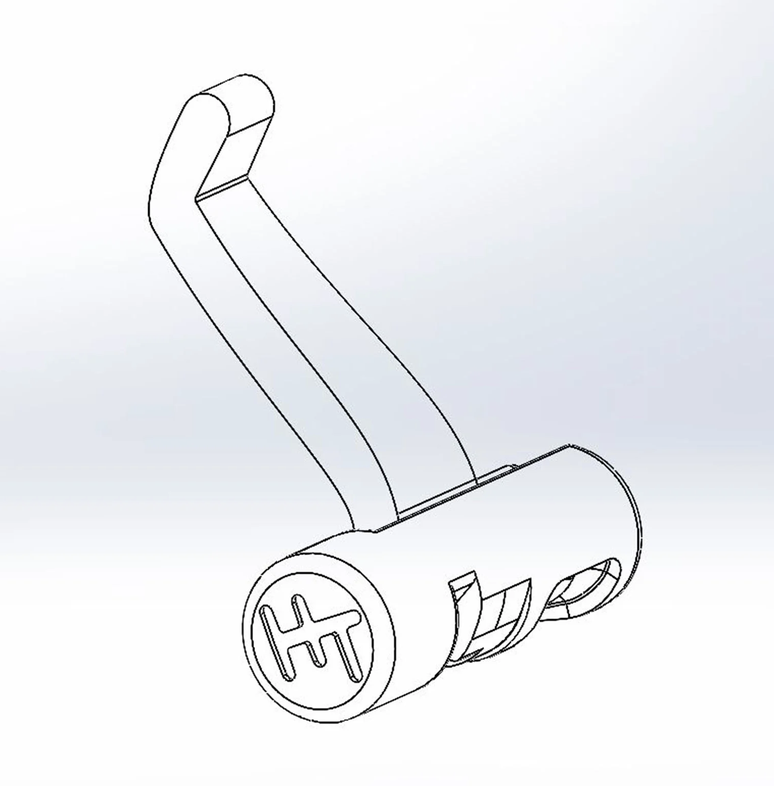
Source: https://hoffmantactical.com/designs/super-safety/
Start Here: The Diagnostic Order Link to heading
If your rifle is giving you trouble, work the list in this order. It runs from free to expensive, and it rules out the causes that look identical to each other before you start buying parts.
- Check your FRT timing. Costs nothing and only takes a minute.
- Check your rifle’s tuning. Watch your ejection pattern, the fix is simple and not overly expensive.
- Address bolt bounce. Only after the first two are ruled out, because this is the step that costs money.
That order matters most for light strikes, which is when the hammer falls but the round does not fire. An FRT timing problem and bolt bounce both produce light strikes and look identical from behind the rifle, so timing has to be ruled out first.
Common Stoppages Link to heading
The new fire control components introduce a new failure point, and in some circumstances highlight issues that are already present in the rifle. Let’s walk through the common issues that come up.
FRT timing is the failure point that didn’t exist before. Since the FRT mechanically resets the trigger, it must prevent the trigger from being pulled until the action is fully in the locked position. If the mechanism allows the trigger to be pulled again too soon, then the hammer will drop before the action is locked causing a light strike.
Trapped cases (often called a stovepipe) are the second frequent issue encountered. This is when a spent piece of brass gets trapped in the action as it closes. The most common reason for this in an FRT application (and in AR style rifles in general) is an over-gassed gun that throws brass forward. When the rifle is ejecting forward, the brass stays in the path of the bolt carrier as it moves forward in the ejection pattern. This can cause the spent brass to become trapped on closing. I want to be clear that the FRT does not cause this issue. It happens plenty with standard trigger group ARs, but putting more brass out of the gun faster may make it occur at a higher frequency.
Bolt over base is another symptom of an over-gassed gun when being fired rapidly. This is a feed stoppage where the bolt rides over the top of the next cartridge instead of picking it up out of the magazine. It can occur because the action cycles faster than the magazine spring can push the next round up and into position. If the magazine spring is worn and reaching the end of life, then this will be even more prevalent. Again, this is not caused by the FRT itself, but by running an over-gassed gun rapidly and making the issue more apparent.
Bolt bounce is the last common stoppage seen with FRTs, and it will be controversial with some people. I can tell you from first hand experience with high speed video that bolt bounce is a real thing. I have seen clear cases of the carrier bouncing off of the barrel extension more than enough to cause an issue. This is something that companies producing machine guns have had to contend with on the AR platform, but it has not been a concern of semi-auto manufacturers until now. When firing rapidly, it is possible that the trigger will be pulled while the bolt carrier is bouncing backward after it hits the barrel extension. This will create a light strike by the hammer hitting the bolt carrier instead of the firing pin, and it will present just like the timing issue we covered first. Since bolt bounce and trigger timing present in the same way, it is very hard for those without access to high speed cameras to differentiate between the two root causes. This is why it is important that timing is the first step in troubleshooting.
How Do We Fix It? Link to heading
If you’re having one of these problems, then let’s walk through how to address each of the issues. For the rifle tuning, we can also make the experience much more pleasant by modifying the rifle to run in a more ideal condition.
FRT timing Link to heading
The easiest way to check the timing of your FRT is to cycle the action while maintaining pressure on the trigger and slowly let the action come back forward. The trigger should physically be blocked from being pulled until the action is fully locked. If the trigger is able to release the hammer before the action is closed, then some combination of the trigger, hammer, and reset cam has been manufactured incorrectly. In the absence of drawings and measurement equipment, the best course of action for this problem is to contact the manufacturer of the components for a replacement.
Tuning problems Link to heading
If you are having feeding problems and trapped cases, it is most likely going to be an issue of the gun running too fast. An easy test on an AR is to watch your ejection pattern. If your brass ejects towards the front of the gun, then you can be relatively sure that the gun is over-gassed. I like to see a 3:00 ejection pattern, or even ejection slightly behind the shooter closer to the 4:00 position. If you have an adjustable gas block, then you can block gas and slow down the system until it runs optimally. For most of us that won’t be an option, so the fix is adding buffer weight. The heavier the buffer is, the slower the bolt carrier group will accelerate when it cycles, and this will slow down the whole system. The good news on tuning the gun to the proper level is that the shooting experience tends to be far more pleasant compared to that of an over-gassed gun. Once the speed of cycling is tamed down to a reasonable level, everything will feel far smoother.
Bolt bounce Link to heading
If you have checked that your FRT is timed correctly and your rifle is reasonably tuned but you still are having problems, then it’s time to take a hard look at bolt bounce. The easiest way to fix this is to add a component that gives you a dead-blow effect to the action. This is accomplished by sliding weights, normally inside of the buffer (but not always). Often the addition of tungsten weights in heavy buffers has given enough of this effect, but recently companies such as KAK and Odin Works are offering purpose built products that address bolt bounce.
Running into an FRT problem I didn’t cover here? Send it my way. This technology is new enough that the failure modes are still being catalogued, and I’d like to hear what people are seeing in the field.